Wool or jute, bigger than you think, quieter than the furniture. How to choose the rug a coastal room is actually asking for.
Learn More

Drawer menu

You've got good pieces. You've placed them thoughtfully. You've stepped back to look and something still feels off.
It's not the objects. It's almost never the objects.
When styling doesn't land, the instinct is to swap things out. Buy something new. Try a different vase, a different tray, a different stack of books. But most of the time, the problem isn't what you've chosen - it's how it's sitting in the space.
Scale is off. A small object on a large surface disappears. A large object on a small surface overwhelms. This sounds obvious, but it's easy to miss when you're standing right in front of it. Step back. Take a photo. You'll see it immediately.
Everything is the same height. When objects sit at the same level, the eye scans across without landing anywhere. You need variation - something tall next to something low, a stack next to a single piece. The contrast creates visual interest.
Too much negative space - or not enough. Sparse can look intentional. Sparse can also look unfinished. The difference is usually in the grouping. Objects that are spread evenly across a surface often feel random. Objects that are grouped with breathing room around them feel curated.
Nothing anchors the arrangement. Every grouping needs something to ground it - a tray, a stack of books, a heavier base piece. Without an anchor, objects can look like they've just been placed down temporarily.
The easiest way to see what's wrong is to photograph it. Your phone flattens the space the same way your eye does when you enter a room. Suddenly you'll notice the book stack is too short, or the vase is crowding the lamp, or there's a gap that looked fine in person but reads as empty in the image.
The other trick is to start from scratch. Clear the surface completely. Add one piece. Then another. Stop when it feels done - which is usually earlier than you think.
Odd numbers. Three objects, five objects. Even numbers create symmetry, which can feel formal or static. Odd numbers feel more natural.
Varying textures. A ceramic vase, a woven basket, a timber object. If everything has the same surface finish, it blends together instead of creating contrast.
Something organic. A dried stem, a branch, a stone. Natural objects break up the rigidity of manufactured shapes.
Height variation. The eye needs a journey - up, down, across. If everything is level, there's no movement.
Restraint. The temptation is to fill the space. But a surface that looks styled is usually one that has room to breathe.
If you've tried regrouping, re-scaling, and rearranging and it still doesn't work, then yes - maybe the piece isn't right. But try moving it somewhere else first. Objects that don't work in one spot often work perfectly in another.
The goal isn't perfection. It's a space that feels considered without feeling effortful.
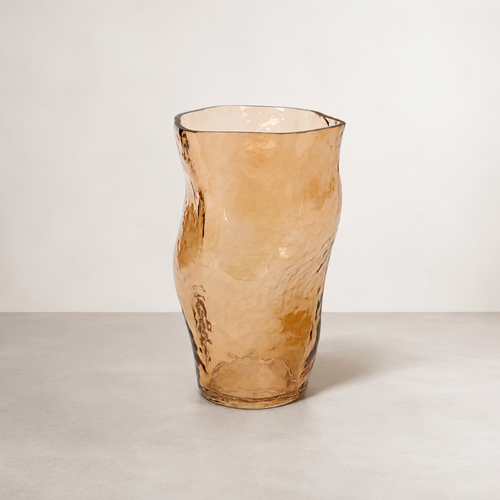
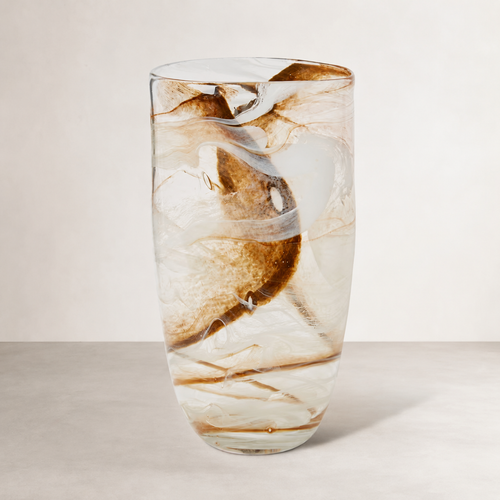
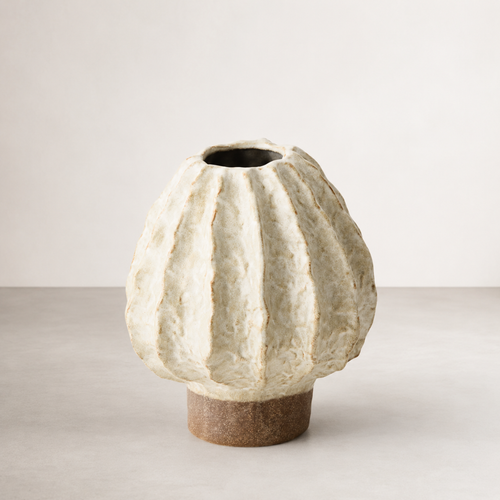
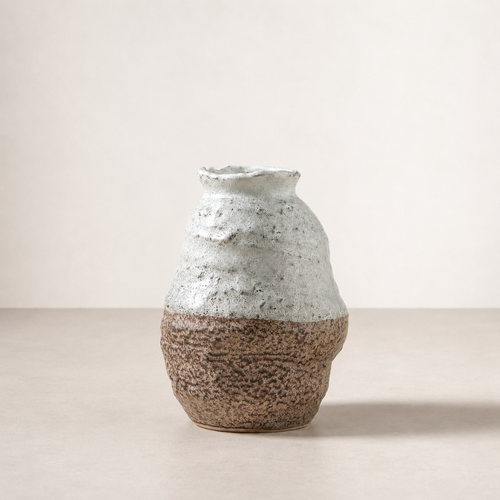
Coastalis pieces are designed to work together - and to mix with what you already have - Shop the Edit Below.


Shop this look
Not sure it works in your room? Style Check it, free →